Fallopian Tube Cancer: The Basics
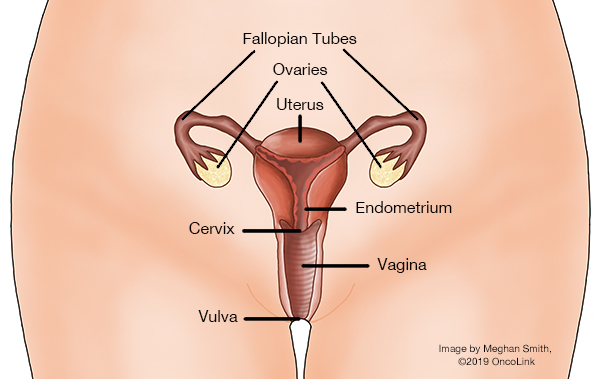
The fallopian tubes are a pair of tubes that join the ovaries to the uterus. Fallopian tube cancer is cancer that starts in the fallopian tubes. It is caused by fallopian tube cells that grow out of control. As the number of cells grows, they form a tumor.
Fallopian tube cancer that has spread from the fallopian tubes to another part of the body is called metastatic cancer.
Risks
The risks could be:
- Infected or inflamed (swollen) fallopian tubes.
- Not having children.
- Not having used birth control.
- A family member with fallopian tube cancer.
- Changes to your genes (genetic mutations) that are passed down from your parents.
Signs of Fallopian Tube Cancer
The signs can be:
- Bbleeding or discharge from your vagina.
- Belly pain.
Diagnosis of Fallopian Tube Cancer
When your provider thinks you may have fallopian tube cancer, they will order tests. Here are some of the tests:
- Pelvic exam.
- Pap test.
- Ultrasound.
- Blood tests.
These tests are important, but a biopsy is the only way to know for sure if you have cancer. A biopsy:
- Looks at a piece of the fallopian tube for cancer cells.
- Is used to find out the cancer type, how normal it is (grade), and if it has spread
A pathology report sums up these results and is sent to your healthcare provider, often 5 to 10 days after the biopsy. This report is an important part of planning your treatment. You can ask for a copy of your report for your records.
Staging Fallopian Tube Cancer
To guide treatment, fallopian tube cancer is "staged." This stage is based on:
- Where and how big the tumor is.
- If there are cancer cells are in the lymph nodes.
- If cancer cells are in other parts of the body.
Stages range from stage I (one; smallest, most confined tumors) to stage IV (four; tumors that have spread to other parts of the body, also called metastatic cancer). The stage and type of fallopian tube cancer will guide your treatment plan.
Treatment
Often, these treatments are used:
- Surgery to remove the cancer.
- Radiation, the use of high energy x-rays to kill cancer cells, can be used before surgery to shrink the cancer.
- Chemotherapy, the use of medications to kill cancer cells, can be given after surgery to kill any cancer cells that are still in the body.
- Targeted therapies work against a certain target found on the cancer cells. You will be tested for certain targets to decide if these therapies are a choice for you.
This article is a basic guide to fallopian tube cancer. You can learn more about your type of fallopian tube cancer and treatment by using the links below.