Exercises for Individuals with Breast Cancer
Exercise is important at all stages of a cancer diagnosis. Exercise can help improve your overall quality of life, restore mobility and strength, improve cancer-related fatigue symptoms, and exercise may also reduce disease recurrence (when the cancer comes back). Physical activity, such as stretching, weight training, and aerobic training, should all be included in your plan of care.
If you are new to exercise or have just had surgery, you should check with your provider before starting an exercise program. The general recommendation following breast cancer treatment is to use your affected arm to the best of your ability as much as possible. For example, use your affected arm as you normally would to perform your daily activities like brushing your hair, getting dressed, brushing your teeth, and eating. However, you may have initial restrictions on lifting/carrying items. Again, ALWAYS check with your provider.
Exercise before Treatment
Prehab is physical therapy that is done before starting treatment. Current research does support that prehabilitation is a safe and effective intervention as part of your cancer treatment, and it may even lead to better outcomes. Benefits include:
- Helping to establish baseline measures, levels of function, and developing a plan of care.
- Helping you return to your usual activities sooner.
- Possibly lowering the chance of losing range of motion in your arms after treatment.
Prehab typically consists of exercises to improve mobility, strength, and endurance before treatment.
Exercise after Treatment
After you receive your breast cancer treatment, you want to make sure to speak with your provider before starting exercises. In order to be safe and properly recover from your treatment, physical therapy can provide you with a safe and evidenced-based approach to rehabilitation. You will need medical clearance before you start to exercise. Exercise is usually started a week or more after surgery. Your plan for physical therapy may include exercises to improve your flexibility, body composition, muscle strength, and activity tolerance. Exercise can also help reduce cancer-related fatigue both during and after cancer treatment. Exercise can also help lessen pain associated with treatment, and exercise has also been shown to improve your emotional/mental health. Exercise may include:
- Stretching exercises to improve mobility in your arms and trunk.
- Resistance training to help improve strength in your arms and core muscles.
- Strengthening your muscles will help stabilize joints - particularly the ones in your shoulder girdle - so you can perform your daily activities.
- Exercises that target your core and posture will help on your road to recovery.
- Cardiovascular exercise to help improve your heart health and aerobic capacity.
There are a variety of different types of exercises that you can do. Below are some examples of exercises you can do before, during, and after treatment. Just check with your provider first!
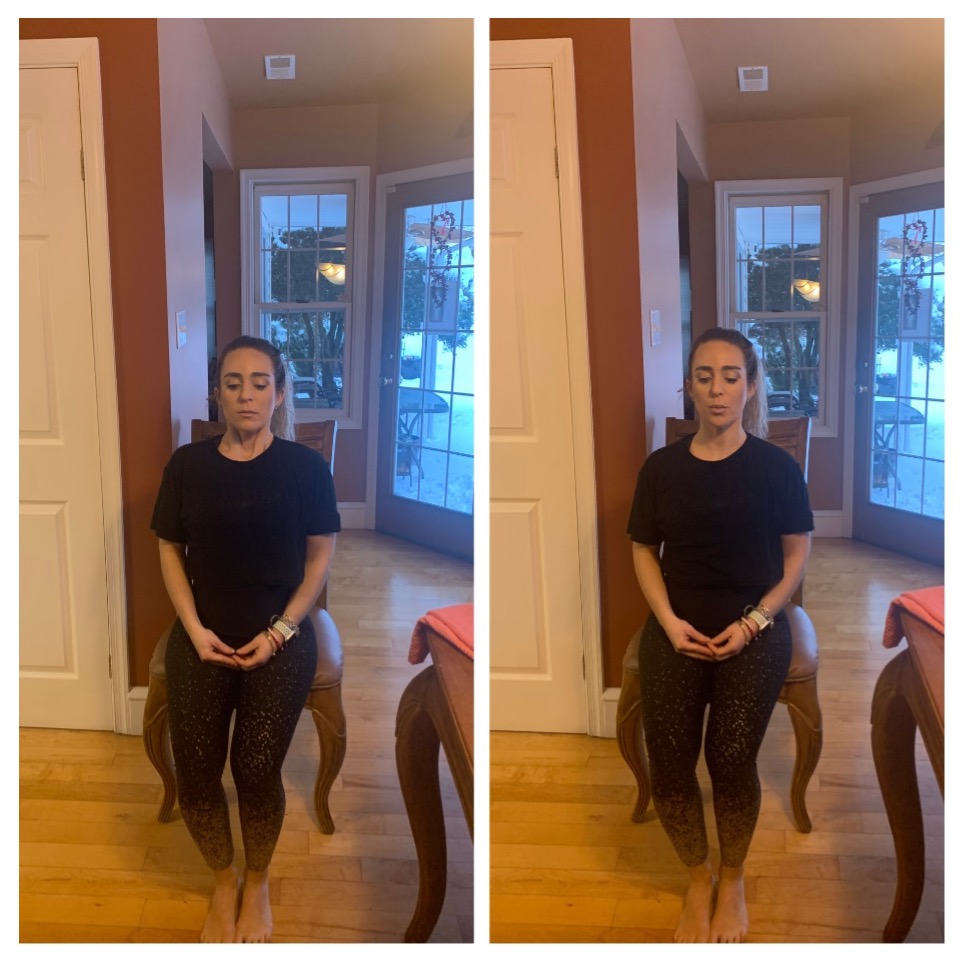
Deep Breathing
- Sit in a comfortable position.
- Gently, take a deep breath.
- Inhale through your nose, filling your belly with air.
- Exhale through your mouth.
You can perform 3 to 5 deep breaths- whatever is comfortable for you!
Elbow, Wrist, and Hand Wrist Exercises
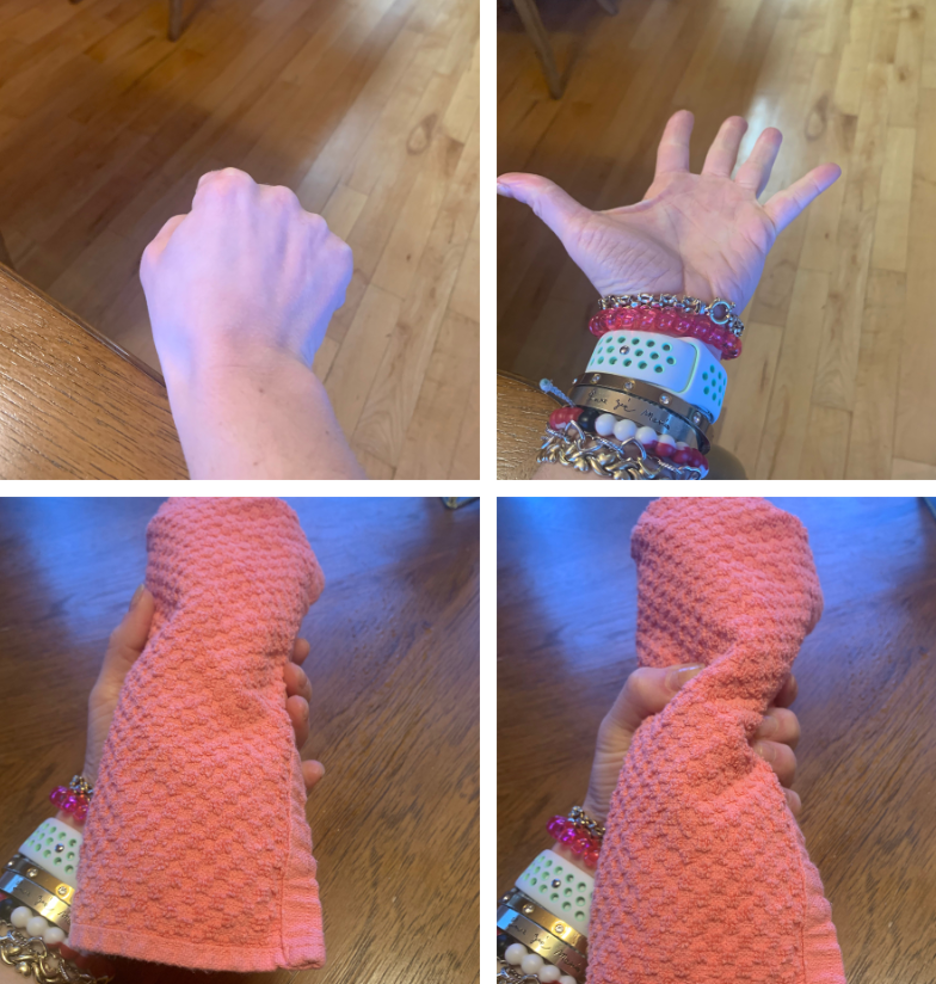
Opening/Closing Hand
- Sit or stand upright.
- Gently make a fist then open your hand.
- Perform 1 to 2 sets, 10 times slowly.
Gripping Exercise
- Sit or stand upright.
- Place a small towel in your hand.
- Gently, squeeze the object.
- Relax.
- Perform 1 to 2 sets, 10 times slowly.
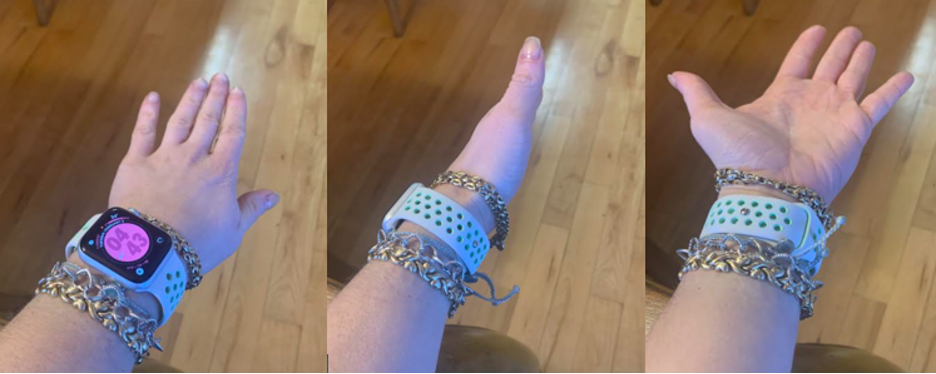
Wrist Pronation/Supination
- Sit or stand upright.
- Rotate your hand and forearm so that the palm of your hand points downward and then SLOWLY rotate it to point upward.
- Repeat 10 to 15 times.
*Keep your elbow bent and by the side of your body. Your arm can rest on the armrest of the chair if need be*
Wrist Flexion/Extension
- Sit or stand upright.
- Rotate your hand and forearm so that the palm of your hand points downward and then SLOWLY rotate it to point upward.
- Repeat 10 to 15 times.
*Keep your elbow bent and by the side of your body. Your arm can rest on the armrest of the chair*
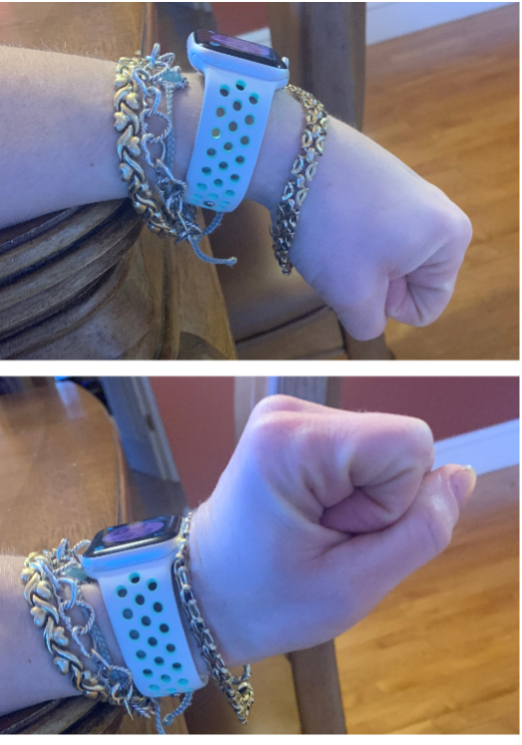
Bicep Curls
- Sit upright in a sturdy chair.
- Bend your elbow and move your forearm upwards. You can perform the exercise with your thumb up (top) or with your wrist up (bottom).
- Hold at the top for 1 to 2 seconds.
- Slowly lower your arm down.
- Perform 10 to 15 times.
*You can use your stronger arm to help your weaker arm*

Scapula Exercises
Shoulder Rolls
- Sit or stand upright.
- Move your shoulders in a circular pattern.
- Perform 10 to 15 reps slowly in both clockwise and counterclockwise directions.
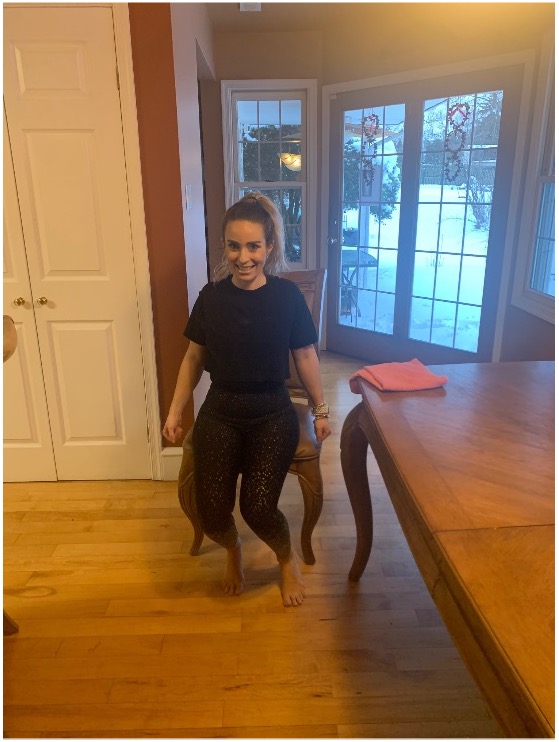
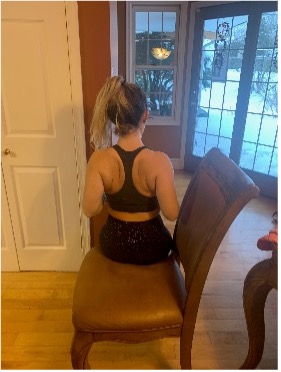
Scapula Retraction
- Sit or stand upright.
- Squeeze your shoulder blades together.
- Hold for 3 to 5 seconds.
- Relax.
- Perform 10 to 15 times.
*Do NOT shrug your shoulders*
Shoulder Range of Motion Exercises
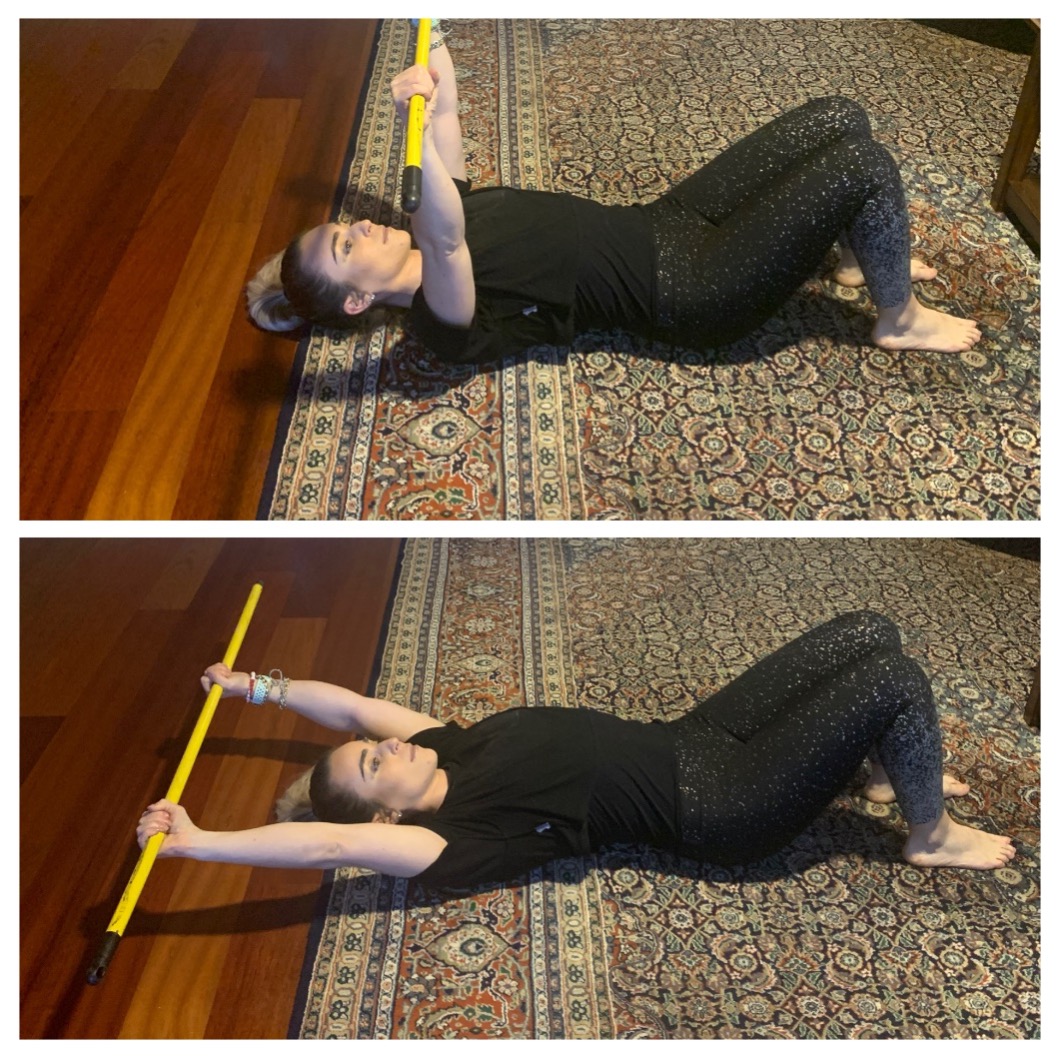
Shoulder Flexion with Wand- Active Assisted
- Lie on your back with your knees bent. This position (knees bent) helps support your lower back.
- Place something like a PVC pipe, old broomstick, or cane in your hands.
- Using your stronger arm, gently move your arms backward (towards your head) until you feel a stretch.
- Hold that position for 5 to 10 seconds.
- Relax.
- Repeat 5 to 10 times.
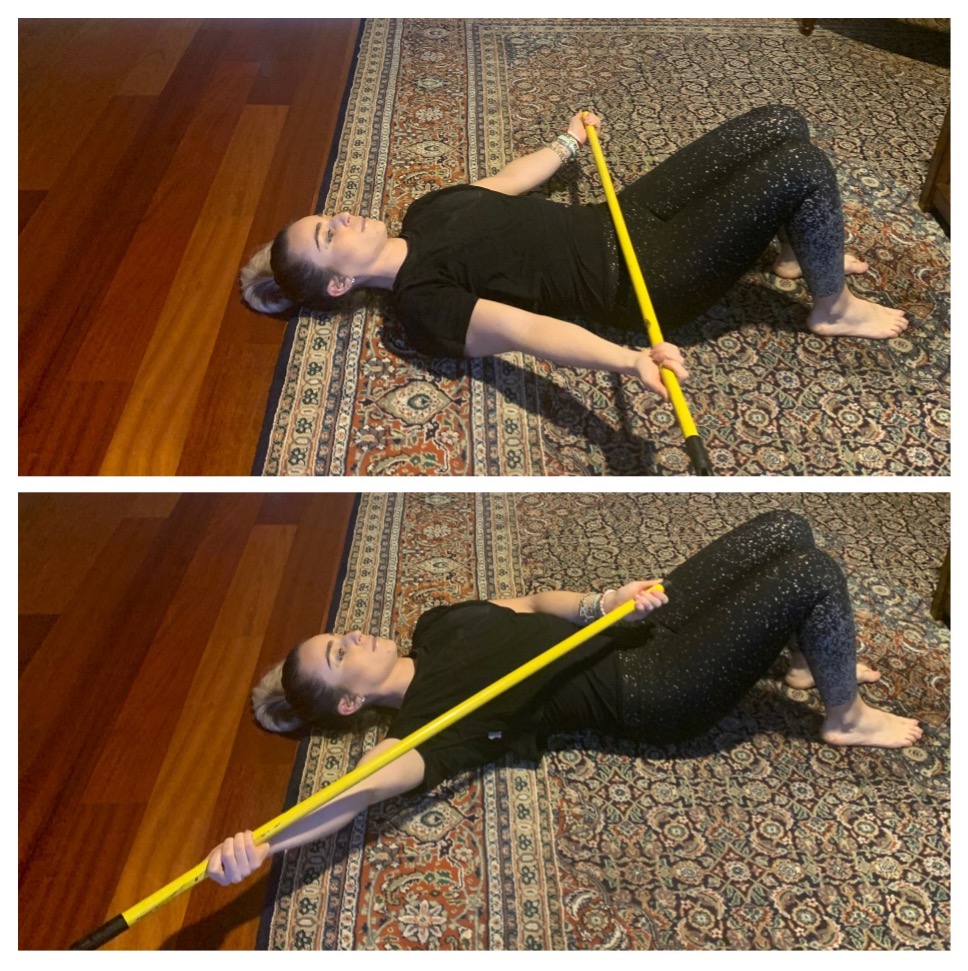
Shoulder Abduction with Wand- Active Assisted
- Lie on your back with your knees bent. This position (knees bent) helps support your lower back.
- Place something like a PVC pipe, old broomstick, or cane in your hands.
- Using your stronger arm, gently move your arms out to the side until you feel a stretch. Remember, to only go as far as you can. Do NOT force the stretch.
- Hold that position for 5 to 10 seconds.
- Relax.
- Repeat 5 to 10 times.
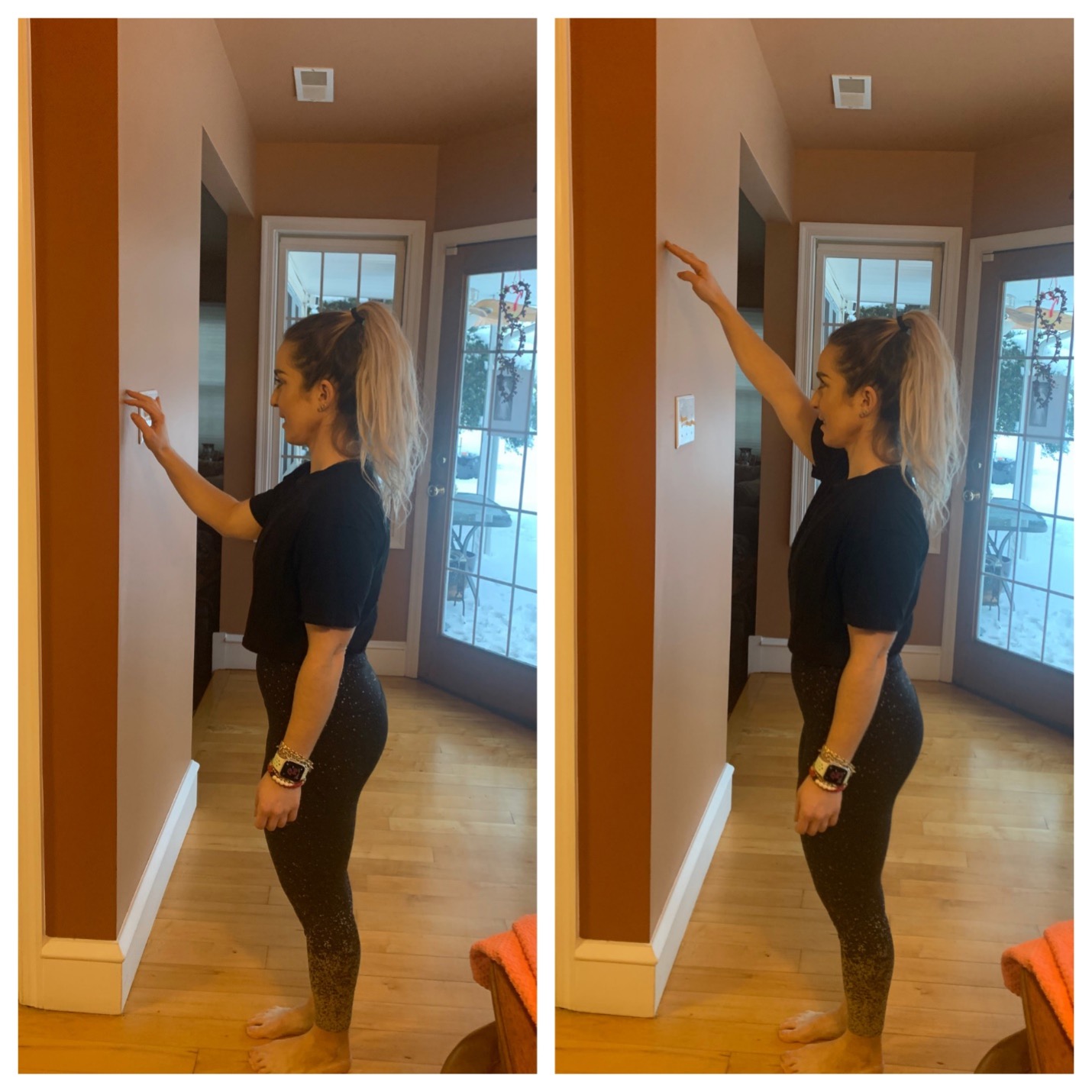
Shoulder Flexion- Wall Walk
- Stand upright.
- Slowly crawl your hand up the wall.
- When you feel a stretch, stop.
- Hold that position for 5 to 10 seconds.
- Relax.
- Repeat 5 to 10 times.
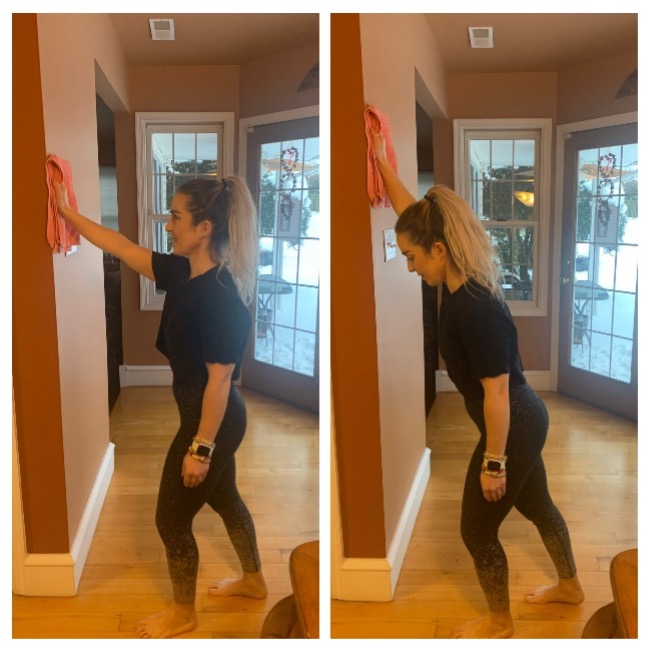
Shoulder Flexion- Wall Slide
- Standing upright about 6 to 12 inches away from the wall.
- Place a towel under your hand. Place your arm out in front of you.
- Gently slide your arm upright.
- When you feel a stretch, stop.
- Hold the stretch for 5 to 10 seconds. As you regain more mobility, you can gently lean into the wall as well to get a better stretch.
- Relax.
- Repeat 5 to 10 times.
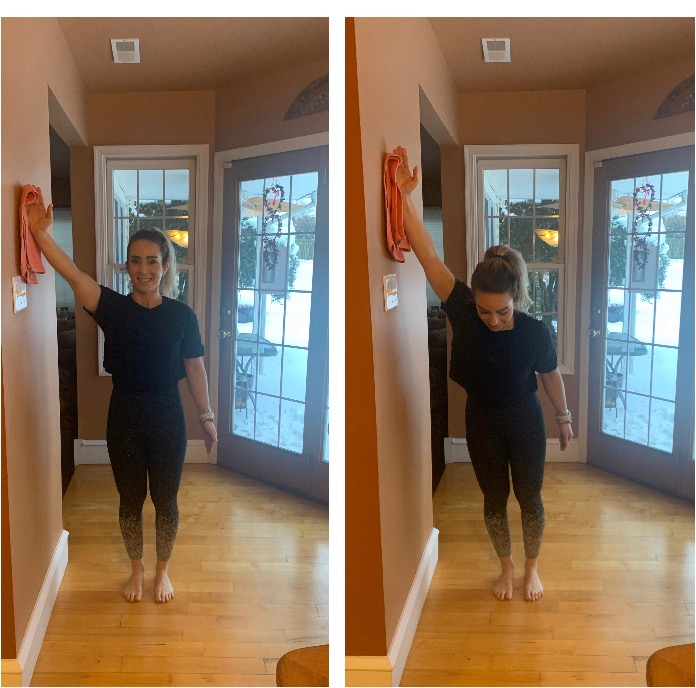
Shoulder Scaption- Wall Slide
- Stand upright next to a wall.
- Place a towel under your hand. Place your arm at about 45 degrees.
- Gently slide your arm upright.
- When you feel a stretch, stop.
- Hold the stretch for 5 to 10 seconds. As you regain more mobility, you can gently lean into the wall as well to get a better stretch.
- Relax.
- Repeat 5 to 10 times.
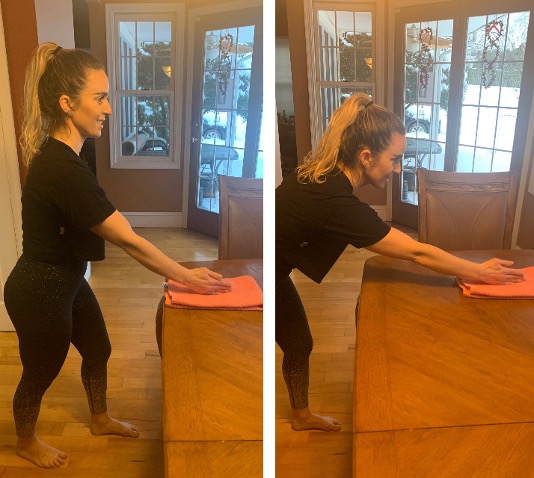
Shoulder Flexion- Active-Assisted (Weight-Baring Position)
- Stand upright. Rest your arm on a table.
- Place a towel under your hand. Gently slide your arm forward.
- Hold the stretch for 5 to 10 seconds.
- Relax.
- Repeat 5 to 10 times.
AAROM Shoulder Flexion
- While sitting in a chair, clasp the hand of the affected arm.
- Slowly raise it up and towards overhead. Use your stronger arm to help raise the weaker side.
- Hold the stretch for 3 to 5 seconds.
- Relax.
- Repeat 5 to 10 times.
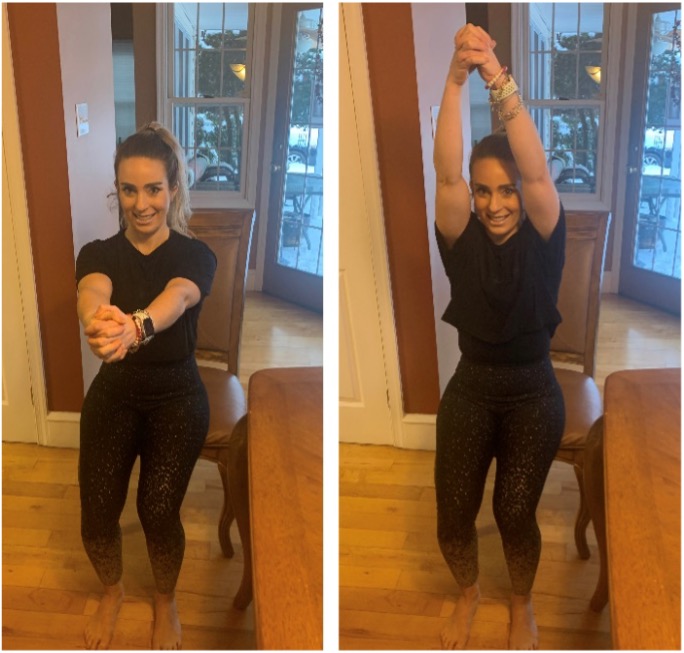
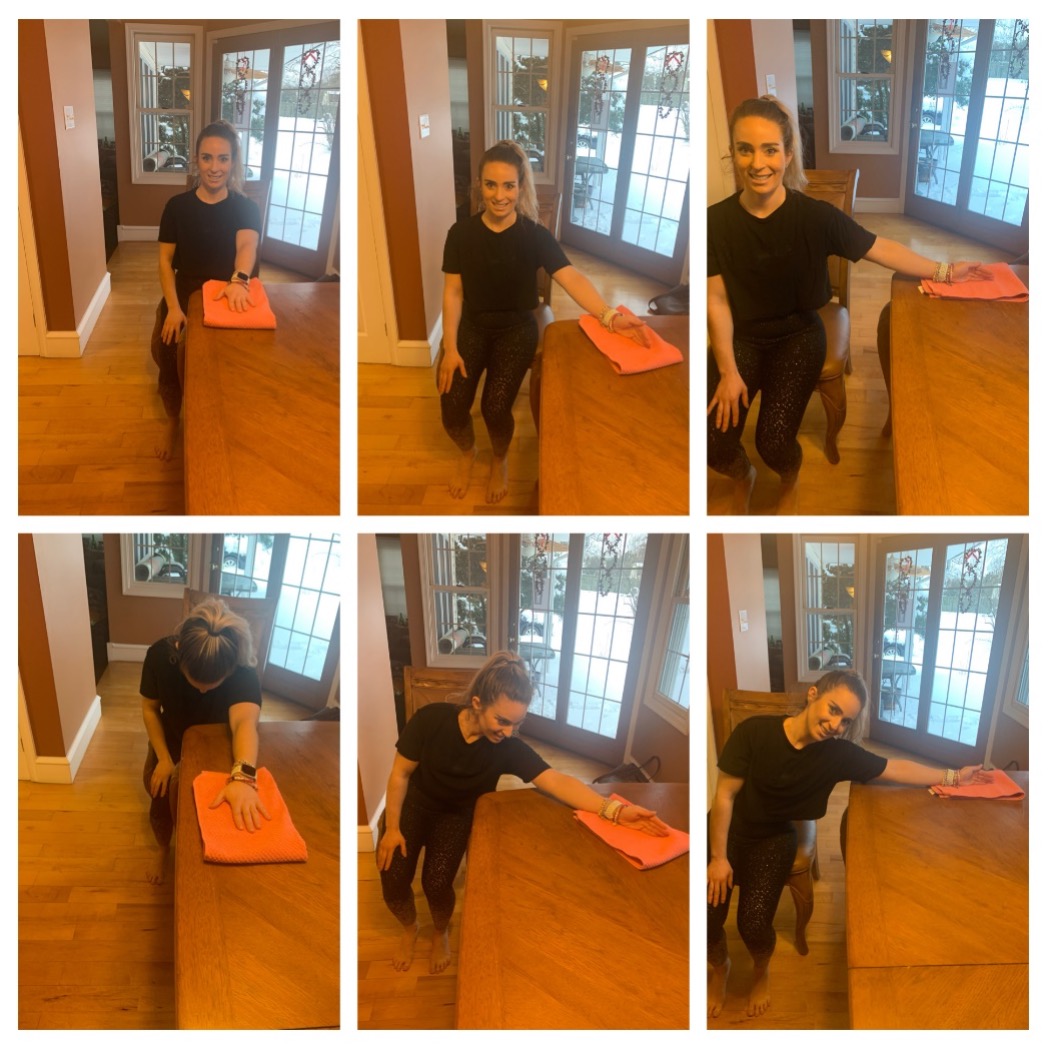
Table Slides- Flexion, Scaption, and Abduction
Flexion (Left top/bottom)
- Sitting in a chair, rest your arm on a table.
- Place a towel under your involved hand.
- By moving your body (leaning forward) gently slide your arm forward.
- Hold the stretch for 5 to 10 seconds.
- Relax.
- Repeat 5 to 10 times.
Scaption (Middle top/bottom)
- Sitting in a chair, rest your arm on a table.
- Place a towel under your involved hand.
- Place your arm at a 45 degree angle. By moving your body, gently slide your arm forward.
- Hold the stretch for 5 to 10 seconds.
- Relax.
- Repeat 5 to 10 times.
Abduction (Right top/bottom)
- Place the chair to the side of the table.
- Sitting in a chair, rest your arm on a table.
- Place a towel under your involved hand.
- By moving your body, gently slide your arm to the side.
- Hold the stretch for 5 to 10 seconds.
- Relax.
- Repeat 5 to 10 times.
Exercise Beyond Treatment
Research shows that regular exercise can improve overall physical and mental health and may reduce the risk of disease recurrence. The American Cancer Society and the American College of Sports Medicine have published exercise recommendations for individuals currently living with cancer as well as cancer survivors. It is strongly recommended that you talk with your provider before beginning any exercise program.
Exercise should be started slowly and performed in short durations, with gradual progression toward higher intensity and longer duration over time. You should always listen to your body and adjust activity as needed. Exercise routines should include a mix of aerobic, resistance, and flexibility training. Current guidelines recommend an average of at least 150 minutes per week of moderate-intensity aerobic activity (or 75 minutes of vigorous-intensity activity) along with resistance training at least two times per week. Moderate-intensity activity is an exercise that raises the heart rate and breathing while still allowing an individual to carry on a conversation, such as brisk walking or cycling at a steady pace. Overall, regular physical activity plays a vital role in improving strength, body composition, energy levels, emotional well-being, and quality of life.
Examples of Exercise:
Aerobic Exercise (also called cardiovascular or cardio exercise)
- Raises your heart rate and uses the large muscles in your body in a sustained rhythmic, repetitive motions.
- Examples: Walking, jogging/running, cycling, swimming, dancing, jumping jacks, and jump rope.
- ACM guidelines recommend: At least 3 times/week for 20 to 30 minutes each session at moderate intensity.
Flexibility Exercise
- Lengthens your muscles and improves your range of motion so you can move more freely and easily.
- Examples: Stretching, yoga, and Tai Chi.
Resistance Exercise (also called strength or weight training)
- Makes your muscles work against an external force.
- Examples: weight lifting, resistance band exercises, body weight strength training (squats, push-ups, pull-ups).
- ACM guidelines recommend: 6 to 10 resistance exercises at least 1 to 3 times/week, 1 to 4 sets for 8 to15 repetitions at moderate intensity (at least 50 to 60 % of the one-maximal repetitions).