The Lymphatic System
What is the lymph system?
The lymph system is the "housekeeping system" of your body. The lymph system is made up of:
- Lymph nodes. Lymph nodes have cells in them that help clear out viruses, dying cells, foreign matter, and bacteria from your body. Each node is about 2 centimeters (cm) in size.
- A network of vessels (tubes) that connects hundreds of lymph nodes all over your body.
- Fluid. Lymph is the fluid that flows between cells in your body. This fluid picks up things like bacteria and takes them into a lymph node for filtering. The bacteria or other foreign things then pass through more nodes in the system before being dumped into the bloodstream to be cleared by your liver.
- Your spleen and thymus gland.
Cancer cells can spread to other parts of your body through the lymph system. Because of this, lymph nodes are one of the earliest sites of spread (metastasis) for some cancers.
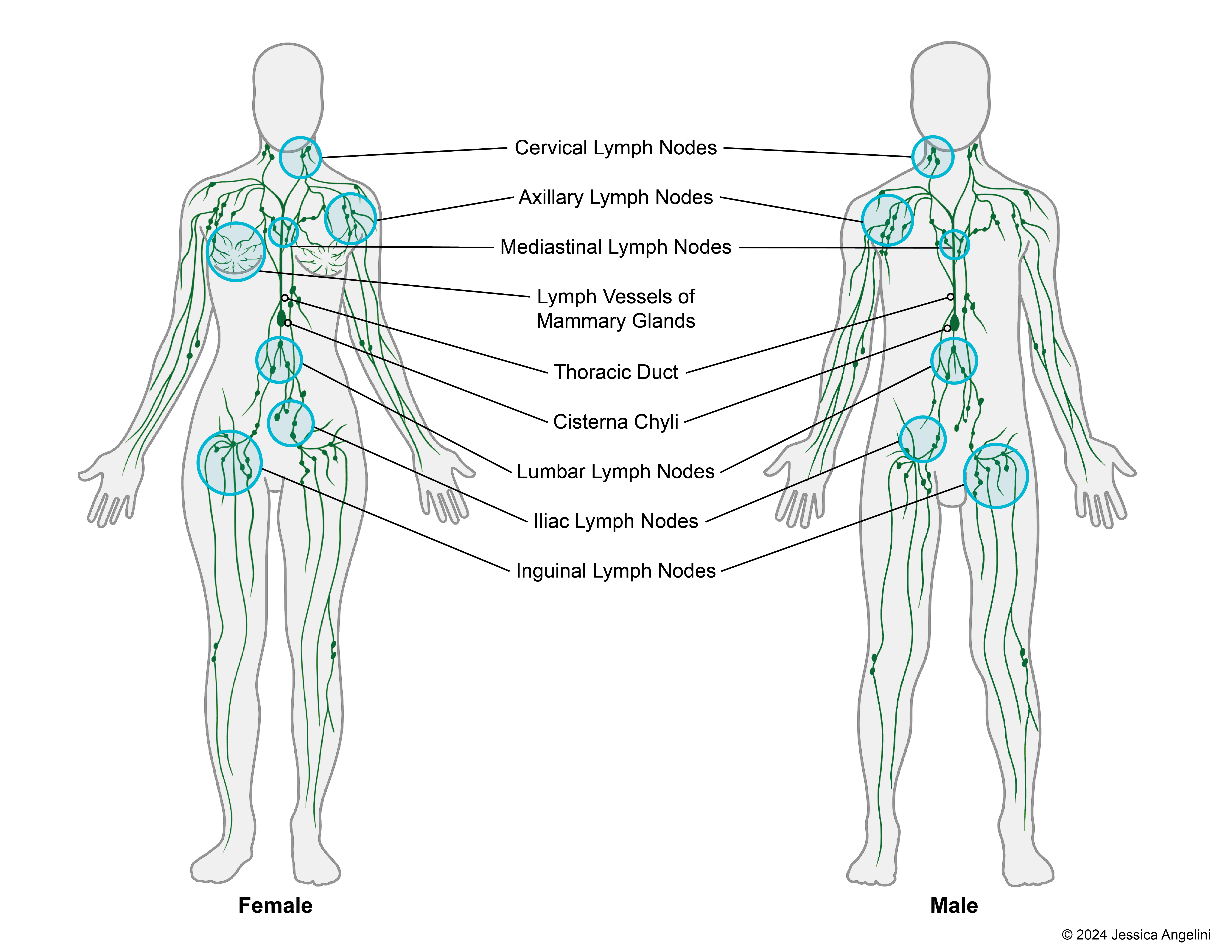
Below is a diagram showing the lymph node system in your body. If you are having lymph nodes removed during a cancer surgery or biopsy, the nodes closest to the cancer are often the ones removed. The number of lymph nodes taken out depends on the procedure and the type of cancer that the nodes are being checked for.
Swelling After Lymph Node Removal
One job of the lymph system is to drain excess (built-up) fluid from your body’s tissues. Lymph nodes and vessels drain extra fluid from your body and return it to the blood near your heart. When lymph nodes have been removed or damaged during cancer diagnosis or treatment, there is a risk of developing a chronic (long-term) swelling called lymphedema. Both surgery and radiation to lymph nodes can damage them and make it harder for them to drain this fluid.
If you have had lymph nodes removed or treated with radiation, you should know about lymphedema and what to do to lower your risk of developing lymphedema.