Rectal Spacer for Prostate Radiation Therapy (SpaceOAR™, Barrigel™)
Radiation therapy may be used to treat prostate cancer. Radiation to your prostate gland can sometimes affect normal organs and tissue, such as your rectum. A rectal spacer is a gel that creates more space between your rectum and prostate gland. It may be used with your treatment to decrease the effects of radiation on your rectum.
What is a rectal spacer?
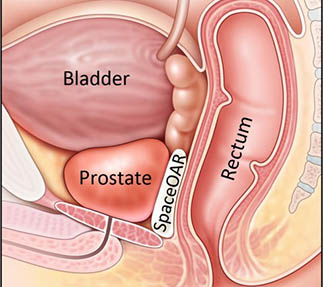
Rectal spacer- Example of SpaceOAR
A rectal spacer is made up of a gel-like substance. When applied, it makes a temporary space between your rectum and prostate. This space helps decrease the effects of radiation on your rectum.
Two brands of rectal spacer have been approved by the Food and Drug Administration (FDA) in the United States:
- SpaceOAR Hydrogel™: Made mostly of water, with synthetic polyethylene glycol (PEG).
- Barrigel™: Made mostly of Non-Animal Stabilized Hyaluronic Acid (NASHA), a gel similar to a substance naturally found in your body.
Both types of rectal spacer are put into your body using a needle. It stays in place for about 3 months while you are getting treatment. The gel is then naturally absorbed (taken up) by your body. Your body will get rid of it through your urine in about 6 months.
How do I prepare for the rectal spacer procedure?
There are a few things you will need to do to prepare:
- Your provider may prescribe you an antibiotic. Start taking the antibiotic the day before your procedure and take it for 3 days, unless told otherwise.
- On the morning of your procedure, you may eat a light breakfast and drink water normally.
- To help lessen the gas and stool in your rectum, you may need to do an enema at home. Your provider will give you instructions on if and when to do this.
- If you are taking any medications that could thin your blood (such as coumadin, aspirin, or Nonsteroidal Anti-Inflammatory Drugs [NSAIDs]), your provider may ask you to stop taking them before the procedure.
It is important to follow the directions that your provider gives you before and after the procedure. Be sure to call with any questions you might have.
What should I expect during the procedure?
Rectal spacer placement is done as an outpatient procedure in a hospital, at surgery center, or at your provider’s office. It is often done at the same time that fiducial markers are placed and before your CT Simulation. It takes about 30 minutes, but you will be in the clinic for at least about 60 minutes. This procedure is often done with local anesthesia (medication used to numb the area). The procedure can also be done under regional or general anesthesia, where you are sedated or asleep. If you are sedated, you will need to have someone drive you home. Your provider will talk to you about your options.
- About 30 minutes before your procedure, you may be given medications to help with anxiety and/or mild pain relief.
- During the procedure, you will be lying on your back with your feet up in stirrups. This is like the position you are in for a prostate needle biopsy. An ultrasound probe will be put in your rectum to help guide the needle. The perineum (the flat skin between your anus and scrotum) will be numbed with medication. A needle will be placed into the perineum to inject the rectal spacer gel. You will feel pressure or pinching, but you should not feel major discomfort or pain.
- You should be able to go back to your normal activities right after the procedure, unless told otherwise by your provider.
What are the possible side effects?
Some possible side effects are:
- Pain and discomfort.
- Needle piercing your bladder, prostate, rectal wall, rectum, or urethra.
- Injection of hydrogel into bladder, prostate, rectal wall, rectum, or urethra.
- Injection of air, fluid, or gel intravascularly (into a blood vessel).
- Rectal mucosal damage, ulcers, or necrosis (tissue death).
Is a rectal spacer right for me?
Rectal spacers can be used for many cases of prostate cancer, but it is not for everyone and there may be other options. Talk about your options with your provider and decide together about the best treatment for you.